Everybody wants to announce that after going through all that paperwork, briefings, training etc to become a Medisave accredited day surgery centre. Why do we go through all that trouble? Well, being able to draw from the patient’s Medisave to pay for surgical treatment is really cool. The patient is happy to tap into frozen savings, not having to pay cash and day surgery centres offering these services can look forward to better business from patients who may find it difficult to pay hundreds of dollars in cash. It’s a win-win situation.
Sure, the number of surgical cases rose after we became Medisave accredited. But along with those minority of genuine surgical cases, came a majority of irritating enquiries.
“Wa, your clinic accepts Medisave payment ah? Good wor. Ei, I do scaling can use Medisave or not?”
“For surgery only. Here is the list http://www.luckyplazadental.com/medisave/
“Scaling cannot ah? The filling can or not?”
“Please check the list of surgical procedures that are covered.”
“Filling also cannot ah? Then braces leh?”

It happens on the phone, it happens at the reception counter and it happens especially in email enquiries. Certainly, these people must either have seen the We are a Medisave accredited day surgery centre. sign at our clinic or saw our webpage with a list of claimable surgical procedures. So why do they still ask us these questions?
“Crown can or not huh?”
“Root canal can or not huh?”
As we receive more and more of these emails, we become more and more convinced that Singaporeans are becoming functionally illiterate. Is the word “surgery” such a piece of proprietary jargon that laymen can be excused for not knowing what it means? That’s obviously not true. Whenever we mention surgery to someone with an impacted wisdom tooth, he/she runs for the door. So why don’t people understand what surgery means when they see the word Medisave? Does seeing the word Medisave diminish one’s ability to read?
Perhaps it’s a little like the Hokkien pengs of yester-years who didn’t understand any orders in English except “book out”. Or could all these irritating enquiries come from spies acting on behalf of competitors who just want to see us wasting our time explaining to fake patients who pretend not to know? We may never know the source of the problem, but literacy aside, anyone not willing to pay for something not claimable is obviously not a very good patient to begin with.

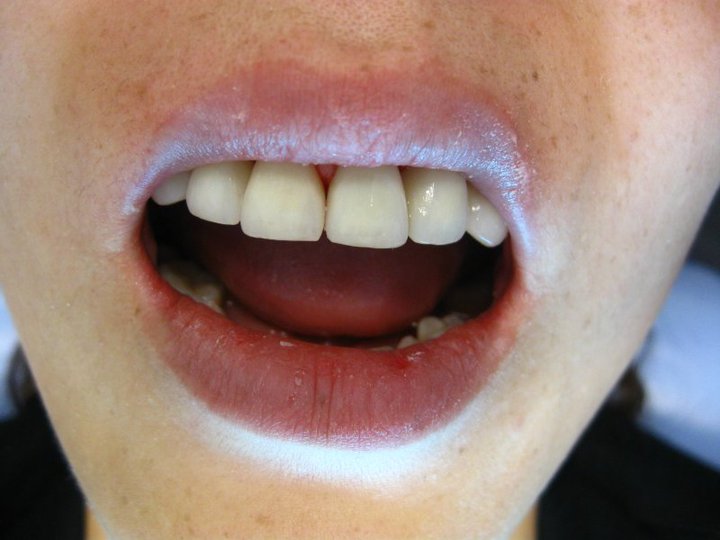
 The chipped tooth has been repaired with composite resin. The other teeth have also been "sculpted".
 The chipped tooth has been repaired with composite resin. The other teeth have also been "sculpted".